
Finished flooring performance is only part of the picture. Substrate moisture, jobsite conditions, testing, and documentation all shape whether a floor performs the way it should.
Why moisture still causes failures
Moisture remains one of the most common causes of flooring failure because it affects more than one part of the system. It can weaken adhesive performance, affect dimensional stability, contribute to mold or mildew concerns, and create expensive callbacks that show up long after the installation looks complete.
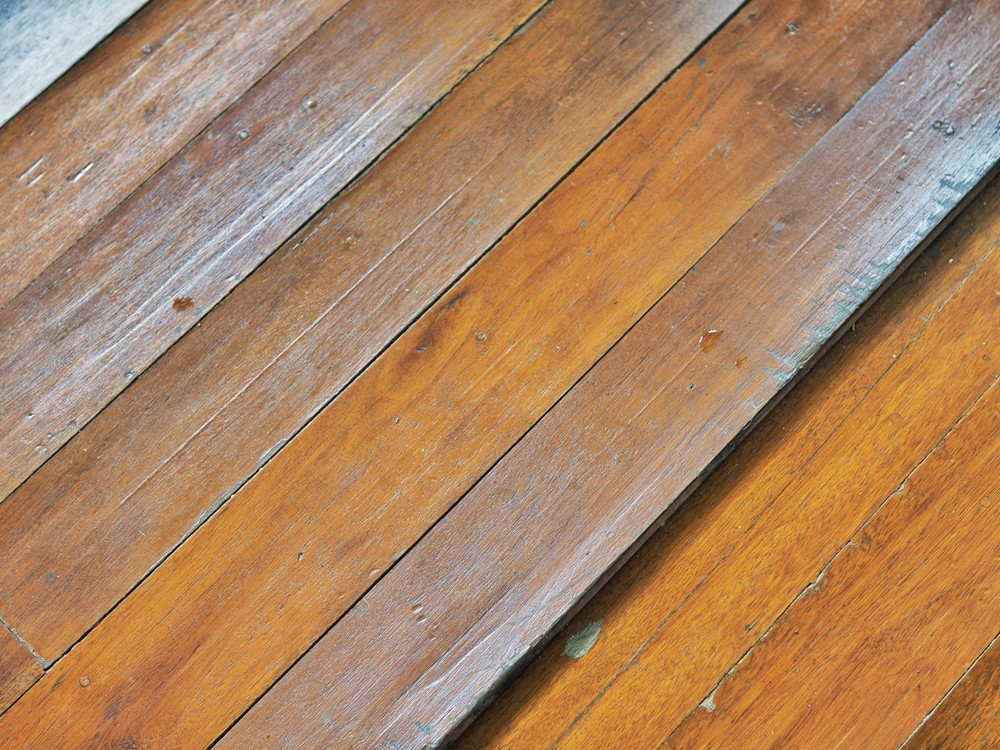
The hard part is that moisture problems are not always obvious at the surface. A slab can look ready. A jobsite can feel dry. A floor can go in smoothly. Then the project comes back to the team months later in the form of bond failure, curling, cupping, staining, or complaints from the field.
Where moisture problems start
Moisture issues can come from several directions at once. New concrete may still be releasing moisture. Below-grade spaces can be more vulnerable. Wood subfloors can carry elevated moisture content. HVAC may not be fully operating before installation. Interior conditions may swing during construction.
When those factors are not stabilized, the flooring system is being asked to perform in conditions it was never designed to handle.
Test before you trust the substrate
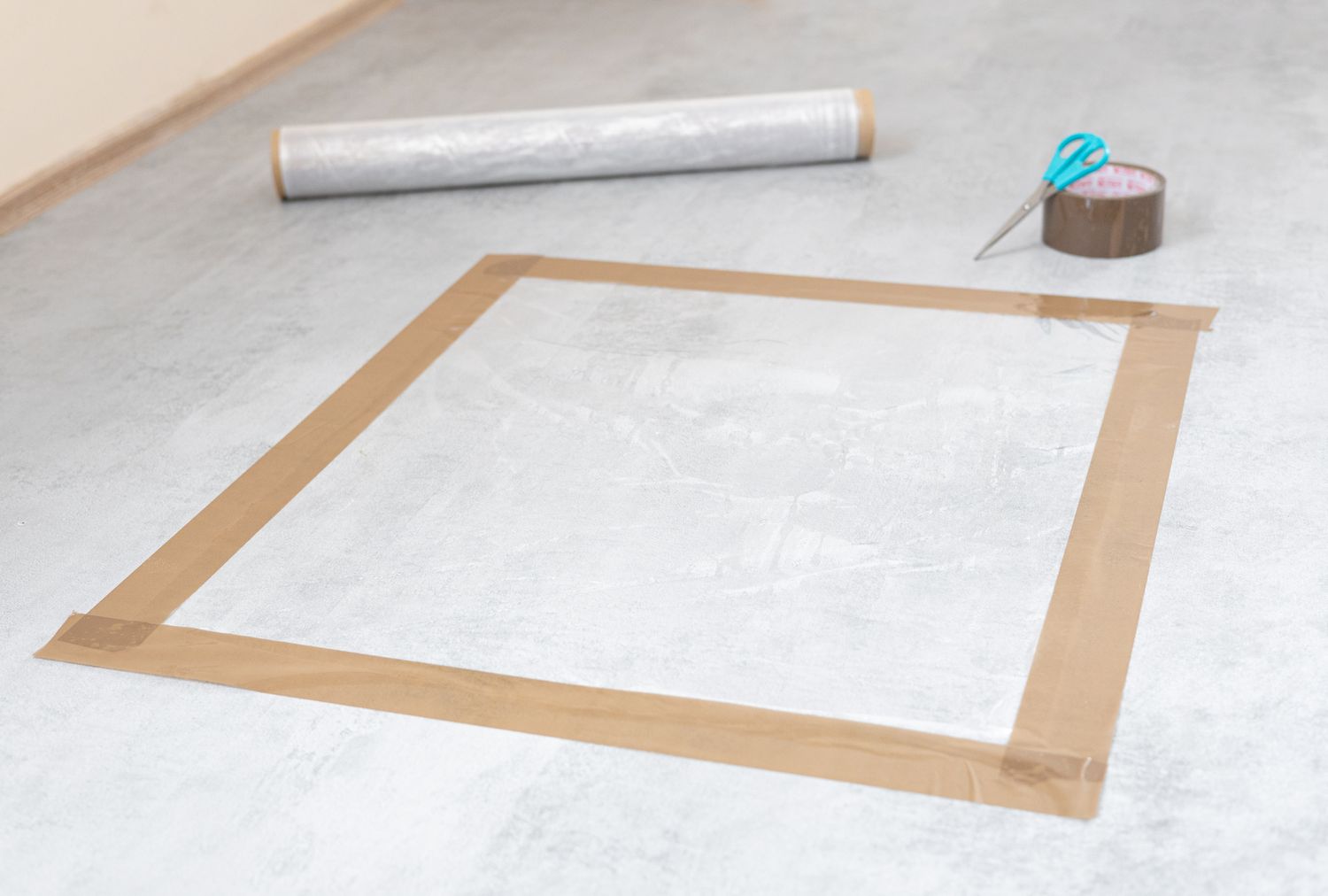
Moisture evaluation should be a routine part of project protection, not a last-minute check. For concrete, the standards most often referenced in resilient flooring work are ASTM F2170 for in-situ relative humidity testing and ASTM F1869 for calcium chloride moisture vapor emission testing.
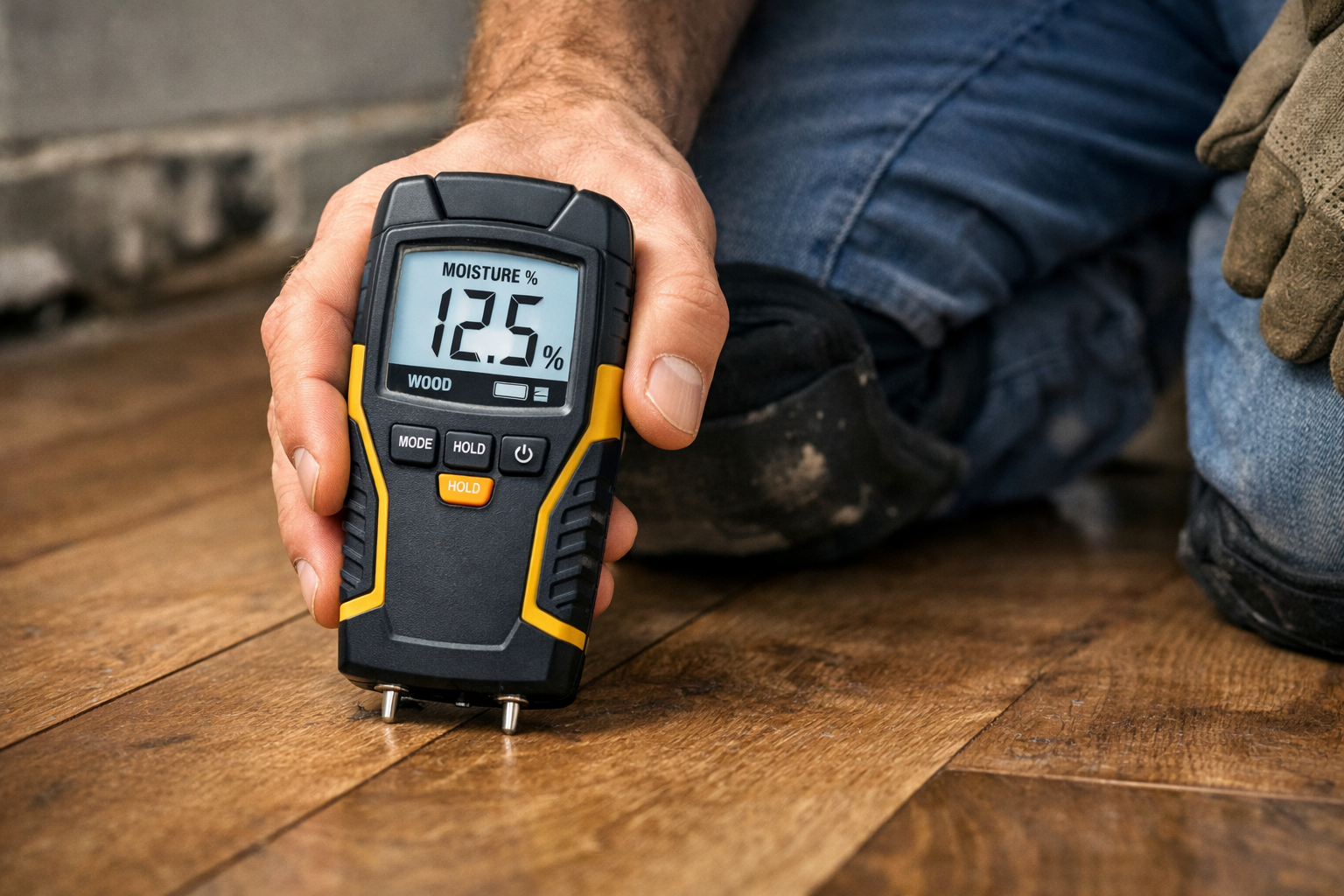
For wood substrates, use the right moisture meter and compare readings to the flooring and adhesive manufacturer requirements. The exact tolerance varies by product, which is why manufacturer guidance matters as much as the field reading itself.
Testing only helps if it is documented. Recorded readings, locations, dates, environmental conditions, and product requirements give the project team a defensible record of the installation conditions at the time the work was performed.
Control the environment before installation
A sound moisture plan starts before the first plank, tile, or sheet goes down. HVAC should be operating. Interior conditions should be close to normal service conditions. Materials should be acclimated according to the manufacturer instructions.
When installation moves ahead before the space is ready, the schedule may improve for a day, but the risk profile gets worse for the life of the floor.
When mitigation is required, treat it as a system
If readings exceed the allowable range, the solution is not simply to add one product and hope for the best. Moisture mitigation works as a system. That includes the substrate preparation, the mitigation approach, compatible patching or leveling materials, and the adhesive or setting material that follows.
Two-part epoxy moisture barriers, moisture-control underlayments, vapor retarders, surface preparation, and compatible adhesives all have a role, but only when the full assembly is matched to the project conditions and the floor covering being installed.
Document the job and protect the relationship
Moisture failures rarely stay contained to the floor itself. They affect schedules, margins, reputations, and relationships between contractors, architects, designers, owners, and distributors. That is why moisture control should be treated as risk management. It protects the project, and it protects the people attached to the project.
A practical way to work smarter
A simple discipline goes a long way: test every job, document the findings, compare those findings to product requirements, control the environment, and mitigate when needed. That approach creates better decisions early, when the project still has room to solve the problem correctly.
T&A Supply can help
If you need help sorting through testing methods, mitigation options, adhesive compatibility, or system fit, T&A Supply can help. Our team works with contractors, installers, architects, and specifiers to connect the substrate conditions, the flooring system, and the installation plan before preventable problems show up.
Talk with your local T&A team about the right moisture-control approach for your next project.
